
Natural vs. Man-Made Slabs: Where They Work Best (And Why We Rarely Choose Just One)
Few materials have the power to completely transform a space quite like a slab. Most people associate slabs with kitchen countertops, but in reality, they're shaping far more of today's homes than many realize. They wrap fireplaces, climb walls, frame doorways, create sculptural furniture, and often become the architectural feature that defines an entire room. At MIC & NAY, we don't view slabs as a finish selection. We view them as a design decision.
The slab you choose determines whether a room feels organic or refined, dramatic or understated, collected or contemporary. It influences not only the aesthetic of a space but also how that space lives, ages, and performs over time. When clients begin exploring slab options, the conversation usually comes down to two categories: natural stone and man-made materials. Both can be beautiful. Both have a place. But they serve very different purposes. The best homes rarely commit to one or the other. Instead, they understand where each material shines and use them intentionally.
Let's break down the differences.
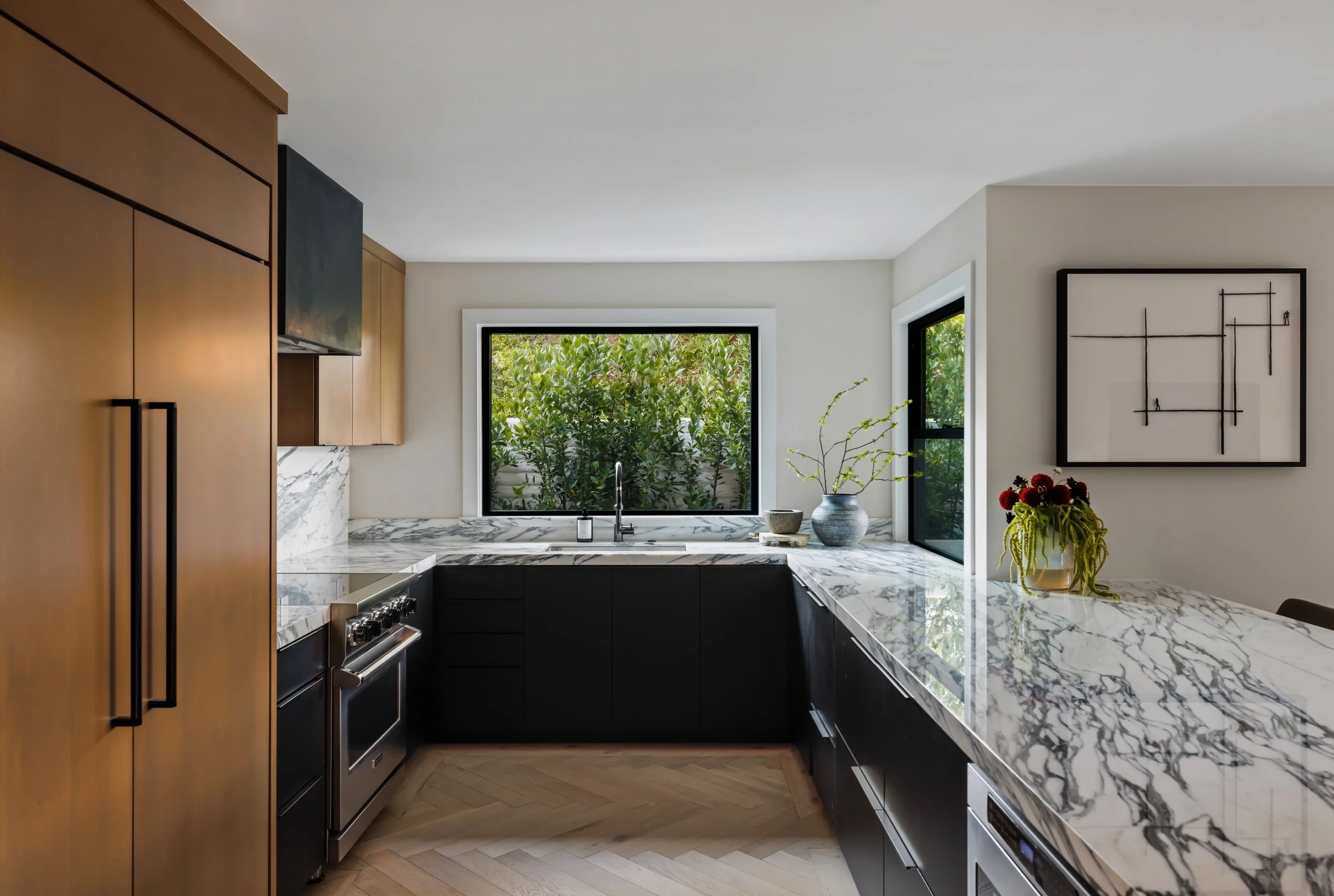
SPANISH OAKS RESIDENCE
Natural stone slabs: Character You Can’t Manufacture
Natural stone is exactly what it sounds like—a material shaped by nature long before it ever enters your home. Sourced from quarries throughout the world, most commonly in Brazil, Italy, and Turkey, stones like marble, quartzite, granite, limestone, travertine, and onyx are formed over millions of years through heat, pressure, and mineral-rich geological processes. Every slab is cut from a larger block, meaning no two pieces will ever be identical. And that's precisely the point. Natural stone carries a level of movement, depth, and variation that manufactured materials continue to chase but rarely replicate. The veining isn't repeated. The color shifts aren't programmed. Even the imperfections become part of the story. It's one of the reasons natural stone continues to feel timeless regardless of trends. It doesn't look designed by a manufacturer—it looks designed by nature.
One of our favorite qualities of natural stone is its versatility in fabrication. Because the material runs all the way through the slab, it can be shaped, carved, rounded, fluted, bullnosed, beaded, or waterjet-cut into virtually any profile imaginable. You can even change the entire feel and look of the stone by just changing the finish- honed, polished, and leathered.
We've wrapped arched openings in stone, created curved kitchen islands, fabricated custom furniture, and even specified a crocodile-embossed waterjet finish that completely transformed the material. The possibilities aren't limited by the stone itself. They're usually limited by the skill of the fabricator. A great fabricator is EVERYTHING in the process.
Where we love using natural stone:
Kitchen islands where the slab becomes the centerpiece of the room.
Bathroom vanities and shower walls for a layered, luxurious feel.
Fireplace surrounds where stone becomes part of the architecture.
Entryways and staircases where first impressions matter.
Feature walls and bed walls when a dramatic statement is the goal.
Custom furniture pieces including coffee tables, side tables, and stone-topped casegoods.
Wrapped doorways and archways for a sculptural architectural detail (STUNNING).
Curved islands, vanities, and millwork details that require the stone to be fabricated into custom shapes.
Exterior applications, when the appropriate stone is selected for the climate and conditions along with the correct sealer.
Of course, beauty comes with tradeoffs.
Natural stone requires a level of respect. Marble can etch. Limestone and travertine are more porous. Even the most durable quartzites still benefit from sealing and proper care. But we often remind clients that patina isn't damage—it's character. Some homeowners want a surface that remains untouched forever. Others appreciate the way a material quietly evolves alongside the life happening around it. Neither approach is wrong. It's simply a matter of understanding what you're signing up for.
The good news is that sealers have improved dramatically over the years, and most maintenance is far less intimidating than people expect.
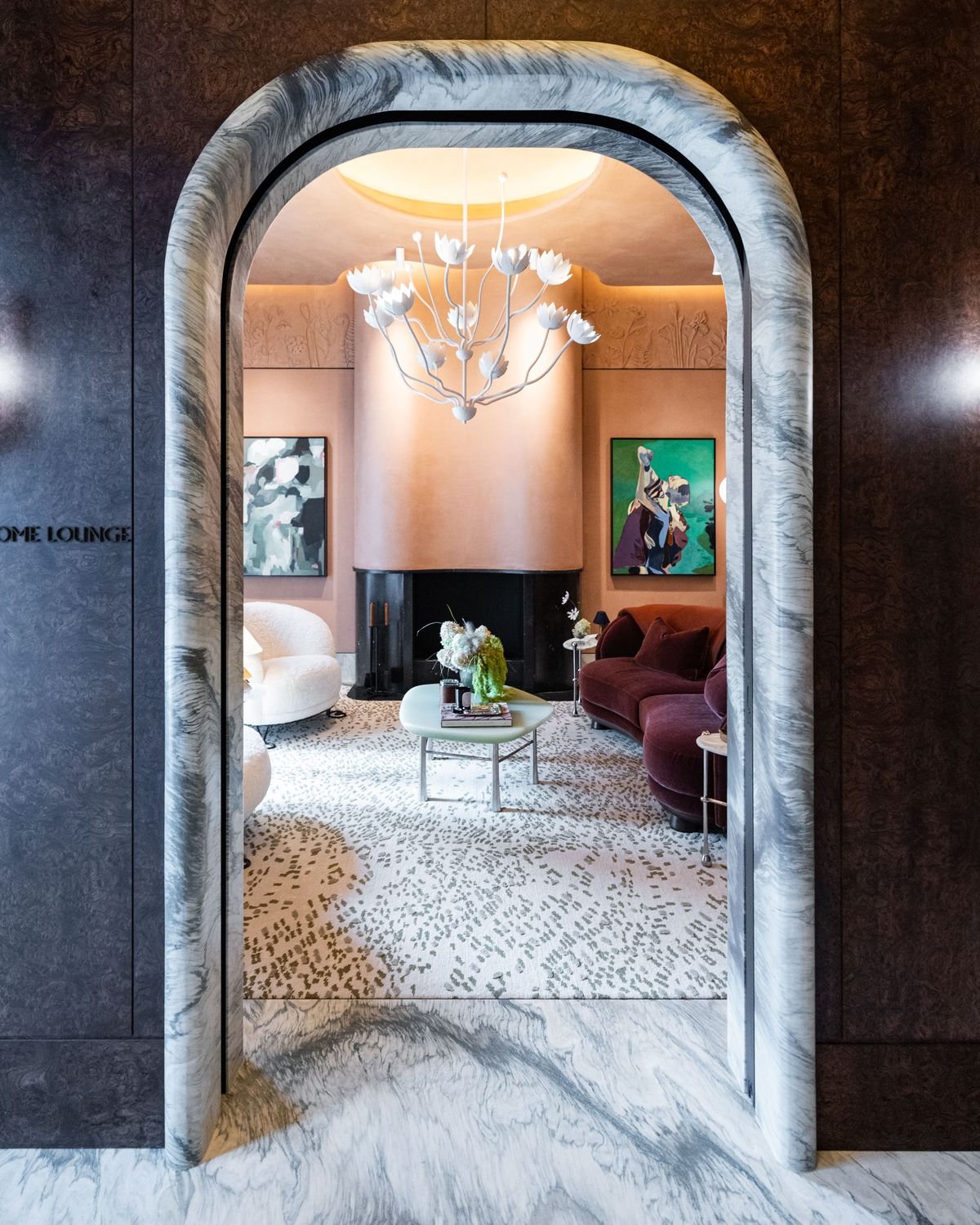
PHOTO CREDIT: JR STONE
Man-Made Slabs: Consistency, Performance, and Practicality
While natural stone brings character, man-made slabs bring predictability. Materials like porcelain, quartz, and other engineered surfaces are designed to solve many of the concerns homeowners have about natural stone. They're durable, consistent, and often require significantly less maintenance. Unlike natural stone, what you see in the showroom is generally what you'll receive throughout the project. There are no surprises, dramatic color shifts, or one-of-a-kind veining patterns. For many homeowners, that's exactly the appeal.
In busy family homes, rental properties, and commercial environments, consistency (and price) can be a major advantage. That doesn't mean every manufactured slab is created equal. One of the biggest mistakes we see homeowners make is selecting a small sample and assuming the full slab will look the same. With porcelain and quartz, you're looking at a printed pattern. Some manufacturers do an exceptional job of mimicking natural stone, while others can look noticeably artificial once viewed across a full slab. We are EXTREMELY picky in the process of selecting a porcelain or quartz slab.
Whenever possible, we recommend viewing the entire slab before making a final decision. A pattern that looks beautiful on a small sample can feel repetitive or overly manufactured when expanded across a large kitchen island or shower wall. Another important distinction is fabrication. Unlike natural stone, porcelain and quartz are not through-bodied materials. The pattern exists on the surface rather than running throughout the entire slab. Because of this, edge details become far more important.
If a porcelain slab terminates at an exposed edge, that edge must be thoughtfully detailed. Sometimes that means returning the material at a ninety-degree angle (building it out in depth). Other times it means incorporating a metal profile or trim detail to create a clean finish. Curves, carved edges, fluting, and many custom fabrication details simply aren't possible in the same way they are with natural stone. Chipping can also be more noticeable. If a busy porcelain or quartz surface becomes damaged, repairs can be challenging because the printed pattern doesn't continue through the body of the material.
That said, man-made slabs excel when used in the right places. Bathrooms are one of our favorite applications, especially when low maintenance is a priority. Laundry rooms, utility spaces, wall cladding, outdoor installations, and many fireplace applications also benefit from porcelain's durability and resistance to heat, moisture, and UV exposure. Like most materials, they aren't inherently better or worse. They're simply designed for a different purpose.
Where we love using man-made slabs:
Secondary bathroom vanities and shower walls where easy maintenance is a priority.
Laundry rooms and utility spaces that experience daily wear and tear.
Wall cladding and feature walls where a clean, contemporary finish is desired.
Exterior applications where UV exposure, moisture, and weather resistance matter.
Outdoor kitchens where heat, sunlight, and changing temperatures can be hard on other materials.
Fireplace surrounds (porcelain only) where heat resistance is essential and there is no wear and tear..
Commercial spaces and rental properties where longevity and consistency are key.
One of porcelain's greatest strengths is its versatility. It can often achieve the look of marble, limestone, concrete, or even wood while providing superior performance in demanding environments. Quartz, on the other hand, remains one of the most popular countertop materials for homeowners who want a clean, consistent appearance with very little maintenance.
Of course, practicality comes with its own limitations. While man-made slabs have improved dramatically over the last decade, they still lack some of the depth, variation, and fabrication flexibility that make natural stone so special. Curved edges, carved details, and intricate profiles often require alternative solutions or simply aren't possible. And while porcelain and quartz are incredibly durable, they aren't indestructible. Chips can occur, and repairs can be more noticeable because the printed pattern doesn't continue through the body of the material. The key is understanding what the material is designed to do—and allowing it to perform in the spaces where it naturally excels.
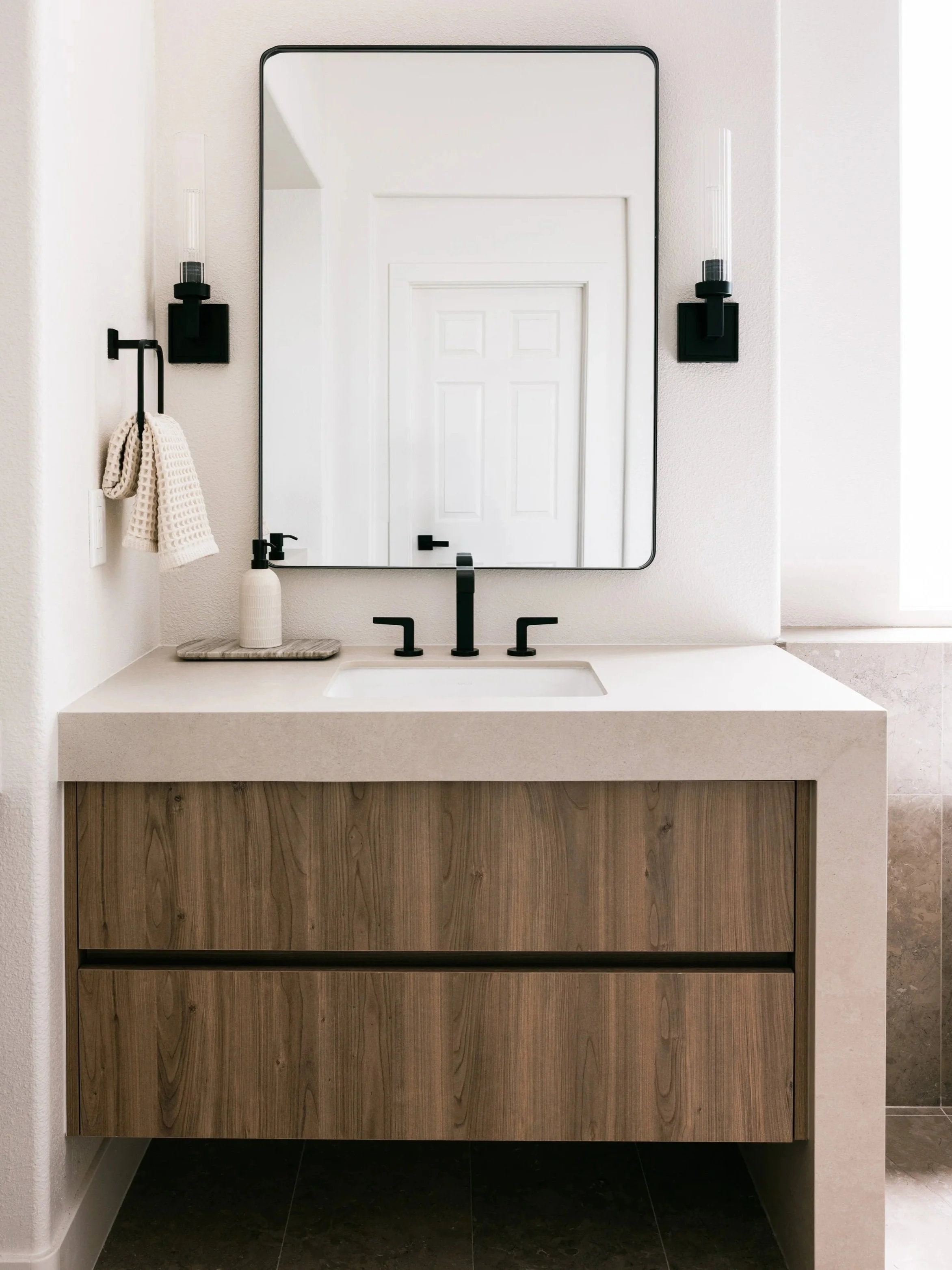
FARR RESIDENCE
Conclusion
At MIC & NAY, slabs are far more than just cover a surface. They introduce texture, establish scale, influence how a room feels, and often become some of the most memorable elements of a home. It’s just a matter of choosing the ‘right’ slab for you and the way you live. When selected thoughtfully, slabs stop feeling like a finish selection all together. They become part of the architecture, part of the experience, and ultimately part of the story your home tells. Our final advice is- there are 100 micro decisions in every design decision of creating your home. Hire a designer!
FAQ
What are the main types of slabs used in homes?
Most of it comes down to two things. Natural stone slabs and man-made slabs. Natural stone like marble, granite, quartzite is pulled from the earth, so no two pieces ever match. A few less common natural stones you can find are soapstone, limestone, onyx, and travertine. These natural slabs have some limitations as they are not as durable or are more porous materials. Man-made slabs like quartz or porcelain are built for consistency and easier upkeep. Both show up in homes constantly, just for different reasons.
How do natural stone slabs differ from quartz slabs?
Natural stone is unpredictable- in a good way. Veining, movement, color shifts, all of it changes from slab to slab. It is a piece of natural rock created and cut from the Earth. Quartz is the opposite. It’s engineered, so it stays consistent and can be repeated. One isn’t better than the other, depending on its use.
Where should slabs be used in a home?
They show up everywhere once you start using them properly. Kitchens are the obvious one, especially islands and backsplashes. Bathrooms go full surface pretty often now, which changes the whole feel of the room. Fireplaces are another big one where a slab can turn into the main feature instead of just a finish. Slabs are used for surfaces such as counters and furniture tops, and wall applications such as bath wall, fireplace walls, etc.
Do slabs need maintenance?
Some do, some don’t. Any natural stone needs a bit of care over time, sealing-every 3-15 years depending on your sealer, and being mindful of stains or etching. Quartz and porcelain are much easier day to day because they do not require sealing and are generally not made of porous materials. The maintenance required on quartz and porcelain would be filling in chips over time which can be difficult if your slab has multiple colors/veining in it.
